Za’atar Homemade Spice Blend Recipe
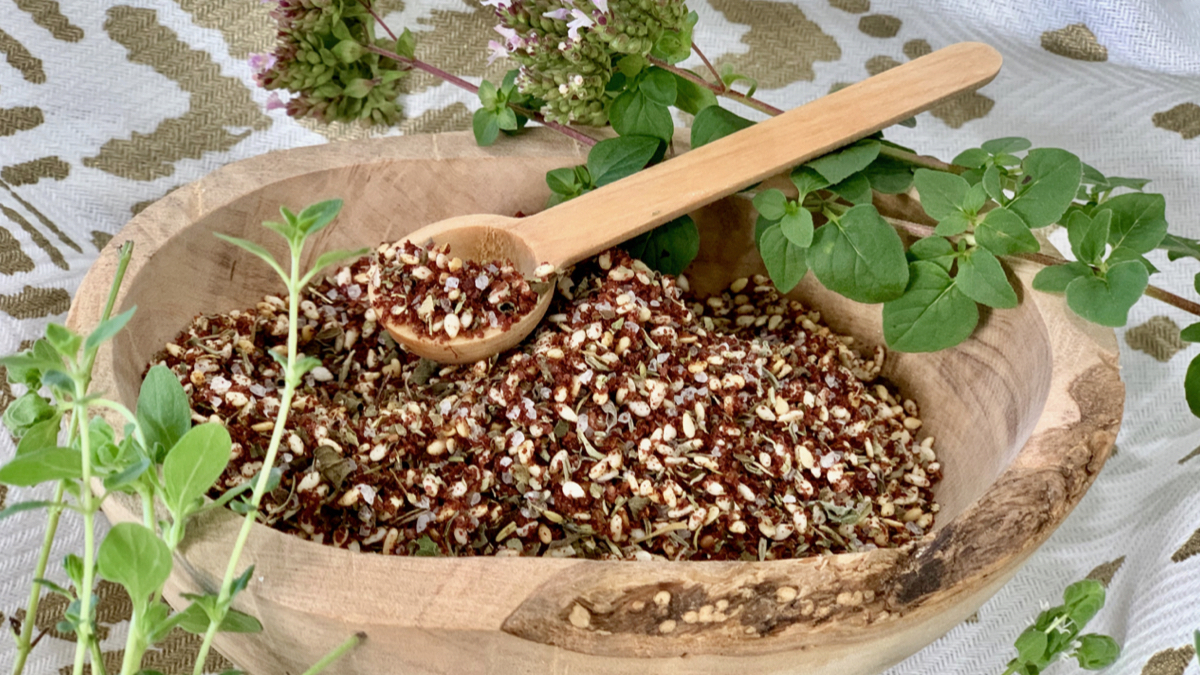
The best homemade Za’atar spice blend recipe starts with garden-fresh dried herbs, toasted sesame and coriander seeds, and a lively boost of sumac.
What Is Za’atar?
Za’atar is a distinctive spice blend with a flavor all its own, originating in Palestine, though it soon found a home across the Middle East.
It isn’t a single spice at all, but a carefully chosen mix that transforms into something completely different once it’s blended.
At its core, it’s a bold, varied blend built from herbs, seeds and spices commonly used in Middle Eastern cooking.
My Syrian mom, though, always described it as a spice mix with Biblical roots.
Traditionally, za’atar combines dried marjoram, thyme and oregano (the woody and floral herbs), along with toasted sesame and coriander seeds for a nutty note and a bright finish, plus my favorite ingredient of all, sumac, which brings a citrusy tang.
You can also layer in other flavors, such as toasted cumin seeds, Aleppo chili or dried dill.
How To Best Describe The Flavor Of Za’atar
This well-loved Middle Eastern za’atar recipe balances toasted, nutty notes from coriander and sesame seeds, which lay down a warm, earthy base for the blend.
Then comes the bright lift from the lemony taste of sumac, a small dark red berry with a sharp citrus character that also gives food a gorgeous deep color.
And NO, sumac spice is not to be confused with the poisonous sumac leaf in the poison ivy and poison oak family, whew!
For me, the herbal side of za’atar is best when it comes from fresh herbs grown in a summer garden, a winter greenhouse or even pots on a windowsill, then dried for later use.
If you’ve ever dried your own fresh herbs, you know how much color they keep when used within 6-months after picking and drying. Compare that to grocery-store dried herbs… and, well, they’ve usually lost both color and flavor long ago!
Za’atar seasoning is a wonderfully adaptable spice mix that works in all kinds of favorite recipes.
Why Make Your Own Za’atar?
Of course, you can pick up a za’atar blend at most Middle Eastern grocery stores, but I’ve got several reasons why making small batches at home makes more sense.
Believe it or not, ounce for ounce, blending your own spices is often cheaper than buying them pre-mixed.
It also lets you dry herbs from your own summer garden and save them for winter cooking.
When you make za’atar yourself, you know exactly how fresh the herbs are instead of wondering whether they’ve been sitting around for years.
And making it at home gives you the freedom to adjust the flavor to suit your own taste.
Sumac – A Favorite Middle Eastern Spice
As mentioned above, sumac is a red berry with delicate citrus notes. Once dried, the berries are ground into a powder, creating the standout spice used in za’atar blend.
Its fruity, gently sour, almost lemony flavor is unlike anything else I know.
This spice is easy to order online from a Middle Eastern market that appreciates your business, especially since it isn’t widely grown in much of America.
Toasting Your Own Seeds
Seeds contain the oil, and that’s where the issue can start.
Over time, oil turns rancid, and you’ll usually notice it right away by the smell.
Even lipstick and body lotions, which are oil-based too, eventually go rancid and develop a distinctly unpleasant odor.
The last thing I want is to spoil a beautiful spice blend by rushing through this step.
Buying good-quality raw seeds and lightly toasting them yourself lets you smell them from the moment you open the package and decide exactly how nutty you want them, depending on how long you toast them.
The best way to store seeds after buying them is in the refrigerator or freezer.
Once toasted, they’ll keep in an airtight container in a cool spot for three months, or in the refrigerator for up to six months.
Different Herbs Bring Extra Flavor
Growing up, we never had an herb garden—plenty of flowers, but no herbs.
My mother always kept a well-stocked pantry of dried herbs, especially when we made our monthly trip into the city to visit Middle Eastern grocers.
Once I grew up and had a home of my own, I discovered how wonderful it is to cook with herbs I’ve grown myself, even if they’re just in pots on the windowsill.
Now that the kids are grown and I have more time to enjoy it, I grow several herb gardens, and since there’s a greenhouse at home, I can keep growing through the winter too.
What I’ve learned? Freshly picked, then dried herbs add a deeper, fuller flavor to my cooking than store-bought dried herbs ever did.
Grow your own, even if it’s only a few pots in a window!
Uses For Za’atar In Popular Mediterranean Cooking
In my kitchen, the ways to use Za’atar spice blend are practically endless!
- Add to your Hummus.
- Elevate your Baba Ghanoush .
- Brush olive oil across pita bread, sprinkle za’atar and lightly toast this in the oven for a fabulous snack or addition to a tapas table.
- Add it to the dough in homemade bread.
- Sprinkle on salads.
- Season Lamb Ribs, soups or stews.
You won’t need much else to flavor food when you’re cooking with za’atar, although garlic and fresh lemon pair beautifully with the blend.
Ingredients Needed
Equipment Needed
- Mixing bowl
- Wooden spoon
- Small sauté pan
- Airtight container
- 1/2 cup Ground sumac
- 4 tbsp Dried thyme
- 4 tbsp Dried wild oregano or Syrian oregano
- 4 tbsp Dried marjoram
- 2 tbsp Raw sesame seeds lightly toasted
- 1 tbsp Coriander seeds lightly toasted
- 1 tsp Sea salt
- 1/2 tsp Black pepper
-
Heat a small skillet on top the stove and lightly toast the coriander seeds and sesame seeds until golden brown. Allow them to cool to room temperature.
-
Grind them to a powder with a mortar and pestle or spice grinder.
-
Measure each ingredient and place in a small bowl. Whisk the ingredients together and store in an airtight container.
- There are different versions of homemade za’atar, depending on the region of Middle Eastern cuisine being prepared. My recipe is based on my Syrian mother’s blend.

Post Comment