Socca
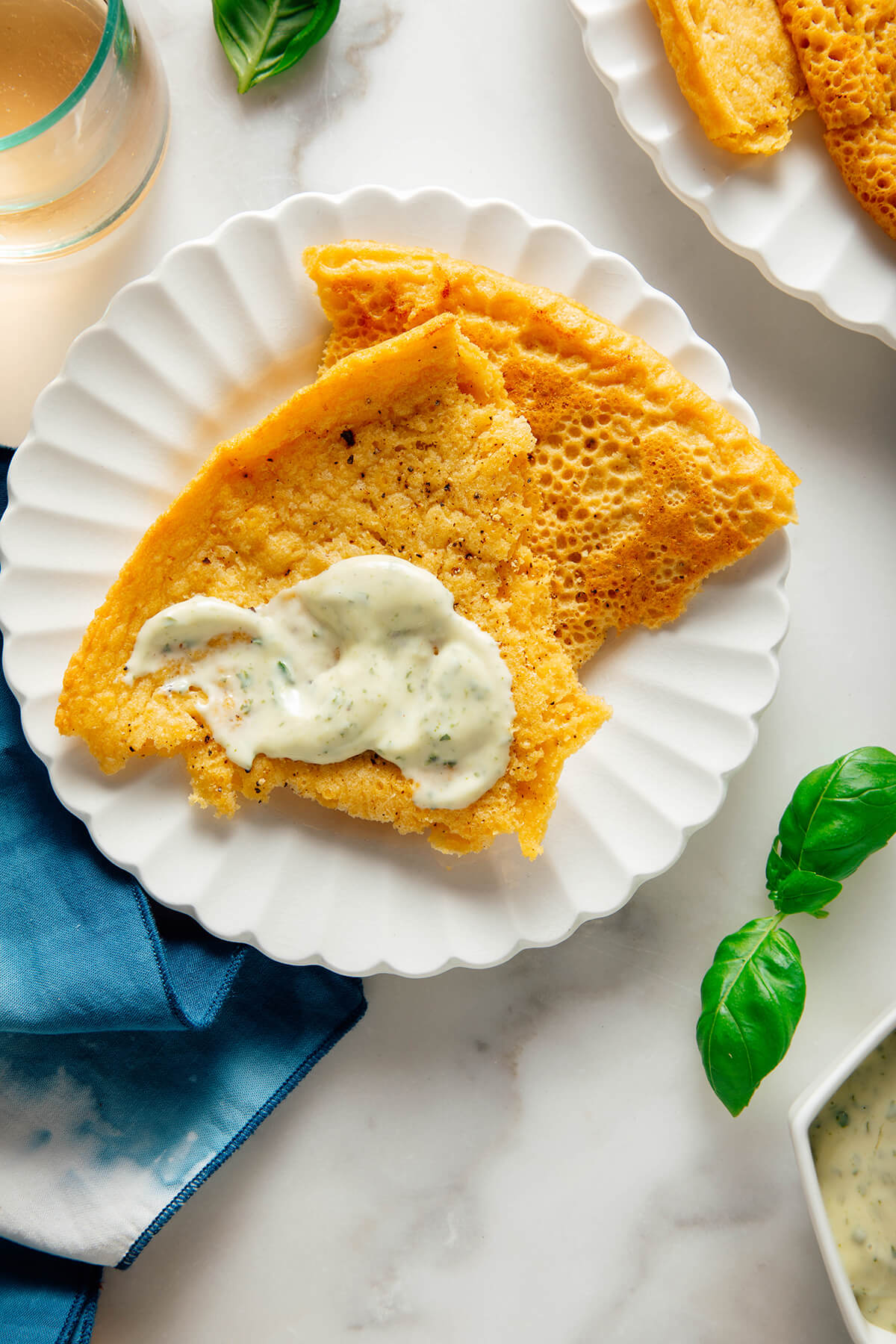
Are you acquainted with socca? If not, let me walk you through it! It’s essentially a rich, savory and salted chickpea flour pancake cooked in fiercely hot olive oil. The rims turn crispy yet pleasantly chewy, the middle stays flaky and tender, and the base comes out lacy and golden. It’s just so delicious. You really should taste it.
Socca is a street-style dish adored in Nice, France, with roots reaching back centuries (it’s closely tied to Italian farinata). I got to sample the authentic version on our honeymoon, and I can’t stop thinking about this homemade take.
To prepare socca, you’ll want a bag of chickpea flour (I like to use Bob’s Red Mill, which is sold in many well-stocked grocery stores). Chances are you already have the rest—olive oil, water, salt, pepper and cumin. That’s all! You’ll see step-by-step photos and a short cooking video just below, then the recipe.
3 Reasons to Try This Socca Recipe
1) You don’t require any special gear.
In Nice, socca is cooked in enormous pans in special wood-fired ovens. At home, I’ve had excellent results with my cast iron skillets. If you don’t own cast iron skillets, you can switch to stainless steel instead—just bake it nearer to the upper end of the time window to get the right browning. Skip non-stick pans—they aren’t built for such high temperatures.
The recipe below makes one 12-inch socca, roughly 1/4-inch thick, with crunchy edges and a gently custard-like center. It’s great for snacking or using as a pizza foundation. The only drawback is that a 12-inch cast iron skillet is heavy, so you’ll need to handle it with care while it’s piping hot.
Alternatively, bake two batches in a 10-inch skillet by cutting the batter in half. This method produces thinner, crispier results, and it’s wonderful. If you’d like to use the socca as a wrapable flatbread, bake it in two batches. You’ll find directions in the recipe notes.
2) You can start immediately.
Traditionally, socca is mixed in large amounts, so the batter rests until it’s time to cook it. Many recipes keep this approach and recommend resting the batter for an hour or more before baking.
To my surprise and delight, my socca came out even better without resting. The texture becomes more appealing and flaky when I mix the batter while the oven warms up! You can make socca any time with pantry staples.
3) It’s nourishing and works for special diets.
Socca is prepared with wholesome chickpea flour, making it more nourishing than flatbreads made with wheat. You’ll get healthy amounts of protein, monounsaturated fats and complex carbs, including fiber. If you’re interested, tap the “nutrition information” section beneath the recipe for the full breakdown.
Socca is naturally gluten-free and vegan, which is a tricky pair to nail! It makes an appetizer or snack everyone can share.
Watch How to Make Socca
How to Serve Socca
Rip off a piece and enjoy it warm by itself, with extra freshly-cracked black pepper or skip it. Pretend you’re spending the season in the South of France and serve it with a chilled glass of rosé.
You can also dip it into a tasty sauce, such as the creamy basil mayo you see in my photos—it tastes like a summertime aioli. Find out how to make it in my recipe notes. Or it would pair nicely with Green Goddess Tahini Dip, which is vegan. If you love olives, serve it alongside tapenade, too.
Serve it like a slightly chaotic wrap. Begin with creamy cheese such as ricotta, feta or goat cheese, or keep it vegan by adding tahini sauce. Include chopped fresh produce like tomatoes and cucumbers, or roasted vegetables like eggplant or cauliflower. Sun-dried tomatoes, olives or a sprinkle of fresh basil make lovely finishing touches. Take a look at Pinch of Yum’s socca with whipped feta and tomato salad—it’s fantastic.
You can even turn it into a terrific pizza. Socca creates a crisp crust that’s lighter than flour-based options. Finish it with basil pesto, mozzarella and any of the choices listed above.
Recipe Tip
To see if it’s ready, use a spatula to carefully lift the socca (it should come up easily) and glance at the underside. When it’s done, it will be a lacy, golden-brown shade. Look at the socca piece below with the air bubbles—that’s what you want. If you’re unsure, bake it for another minute or two.
Print
Socca
This homemade socca turns out beautifully golden, crisp and chewy, with no waiting period. This recipe makes one 12-inch flatbread or two slimmer 10-inch flatbreads (see note).
- Set a large, 12-inch* cast iron or stainless steel skillet on the center rack in the oven. Preheat the oven to 475 degrees Fahrenheit.
- As the oven heats up, prepare the batter. In a bowl, whisk together the chickpea flour, water, 2 tablespoons of the olive oil, salt, pepper and cumin. Leave it to rest while the oven finishes warming.
- Carefully take the hot skillet out of the oven (use oven mitts!). Pour in the remaining tablespoon of oil, then swirl the pan so it coats evenly. Add in all the batter, and return the skillet to the oven.
- Bake for 17 to 19 minutes, until the edges look toasted and are pulling away from the skillet, and the underside is golden and lacy brown. Enjoy the socca warm or let it cool to room temperature. Any leftovers keep well in the refrigerator for as long as 5 days, or in the freezer for several months.
Notes
Recipe developed through trial and adjustments, with references to David Leibovitz, The Daring Gourmet, and Pinch of Yum.
Smaller skillet option: If you prefer smaller soccas or you only have a 10-inch skillet, you can cut the batter in half and cook it in two rounds. Use ½ tablespoon olive oil per batch in the skillet, and bake for 12 to 15 minutes.
Creamy basil sauce: To make the herbed sauce shown in my photos, slice 1 medium clove garlic into several pieces and finely chop it in a food processor. Add 1 cup mayonnaise, 1 cup lightly packed fresh basil leaves, a scant ½ teaspoon fine salt, and plenty of freshly ground black pepper. Process until it turns smooth.
Nutrition
The information shown is an estimate prepared by an online nutrition calculator. It shouldn’t be treated as a replacement for a registered nutrition professional’s guidance. See our full nutrition disclosure here.

Post Comment