Easy Veggie Pad Thai
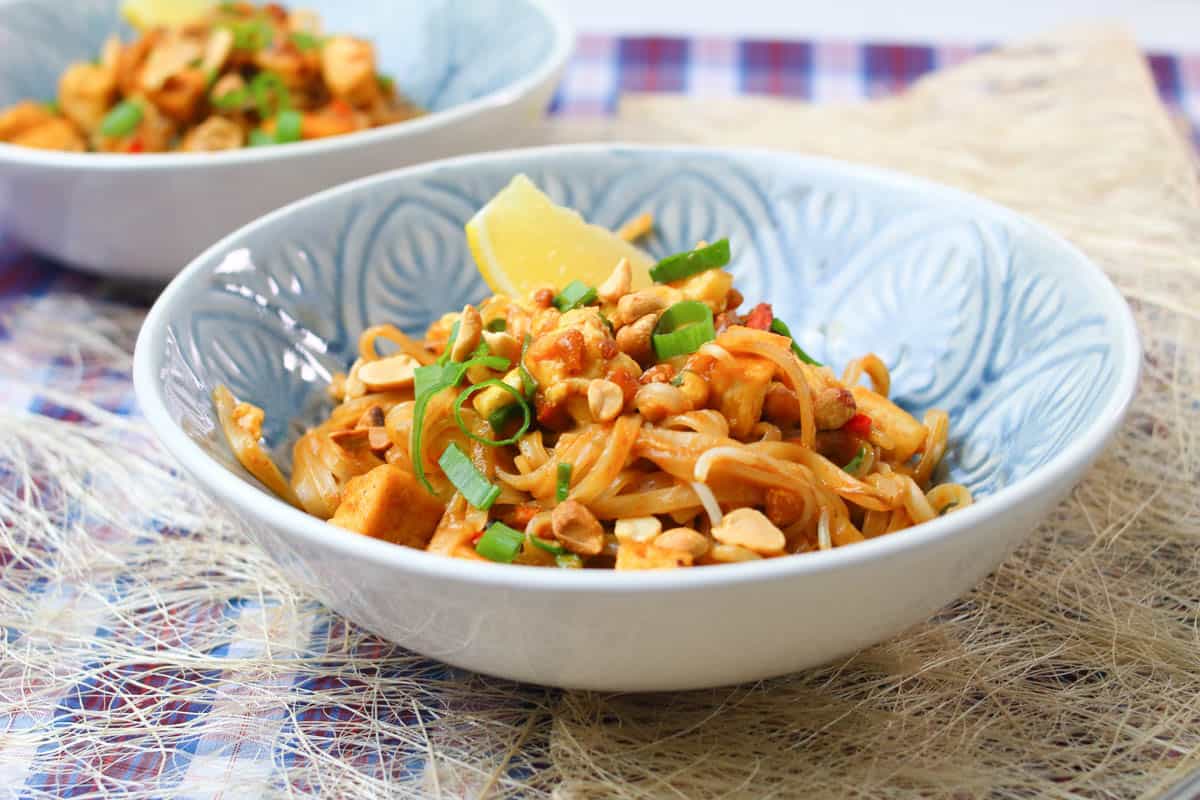
Some of my favorite memories from Bangkok come from veggie Pad Thai bought from street stalls, piled onto paper plates and finished off by me with plenty of fiery condiments. Since it’s such a beloved dish, you’ll spot it on just about every corner. By the time I headed home, I’m pretty sure I had eaten my body weight in Pad Thai noodles.
This post may contain affiliate links. As an Amazon Associate, I earn from qualifying purchases. See my Affiliate Disclosure.
Rice noodles get a fast stir-fry with the classic Thai flavor base, plus bean sprouts, fried tofu, and sometimes shrimp or chicken. Once it’s on the plate, the saucy, chewy noodles are topped with a squeeze of lime and a handful of crushed roasted peanuts. Every vendor sets out a spread of extras like crushed chiles, pickled chile peppers, hot sauce, and more so you can season it exactly how you like.
This Veggie Pad Thai recipe is simple to make at home, and the finished dish tastes just as satisfying as the Pad Thai from your favorite Thai restaurant.
What is Pad Thai?
Pad Thai is a rice noodle dish and one of the most popular items on any Thai restaurant menu. As one of Thailand’s best-known national dishes, Pad means “fried,” while Thai points to its “Thai style” roots.
Because it’s made with rice noodles, Pad Thai literally translates to “Thai-style stir-fried noodles.” It’s a street-food favorite and a true everyday staple in Thailand (there’s a reason it’s known as the “Land of Smiles”!)
Pad Thai can easily be made vegetarian or vegan by using vegetarian fish sauce along with tofu or another plant-based protein. You can also make it with shrimp, pork, or chicken and regular fish sauce.
This veggie Pad Thai uses fried tofu for protein, but you can swap in meat or seafood, or add them alongside the tofu.
What ingredients do you need to make this Pad Thai?
A lot of the ingredients are pantry basics, and the rest are easy to track down at most supermarkets or an Asian grocery. For anything that may be tougher to find locally, I’ve added an online option, but it’s still a good idea to check your nearby Asian market or regular grocery store first.
- Palm sugar or brown sugar
- Tamarind paste (also called tamarind concentrate) or use tamarind pulp that has been soaked, squeezing the liquid out to use in the sauce
- Thai fish sauce or vegan fish sauce
- Chile paste (aka sambal oelek)
- Firm tofu
- Vegetable oil (any neutral flavored cooking oil with a high smoke point—avocado oil, peanut oil, canola oil, corn oil, safflower oil, etc.)
- Garlic
- Broth (vegetable or chicken)
- Peanut butter (preferably all-natural, without added sugar)
- Black bean sauce
- Hot red chile (Thai, serrano, etc.)
- Wide Thai rice noodles
- Bean sprouts
- Beaten eggs (optional)
- Cilantro
- Salt and pepper
- Roasted peanuts
- Green onions
- Lime juice (optional)
How do you make it?
- This recipe does have a fair number of ingredients, but the cooking part is refreshingly easy. Here’s the basic process:
- Soak the noodles in hot water until they soften, then drain them well.
- Combine the sauce ingredients in a bowl.
- Warm the oil in a wok or large nonstick skillet and quickly sauté the garlic.
- Pour in the sauce, bring it to a boil, then lower the heat and let it simmer.
- Add the rice noodles and toss until they’re evenly coated in sauce.
- Mix in the fried tofu, bean sprouts, scrambled egg, and fresh cilantro until just combined.
- Add salt and pepper to taste.
- Finish with chopped peanuts and green onions before serving.
- Set out lime wedges, crushed chile peppers, Prik Nam Pla, pickled chiles in vinegar, fish sauce, chile paste, sriracha, and any other condiments so everyone can dial in the heat to taste.
Variations on Pad Thai
- You can make Vegetarian Pad Thai just by swapping in vegan fish sauce for regular fish sauce in this recipe.
- Vegan Pad Thai follows the same formula, uses vegan fish sauce instead of regular fish sauce, and leaves out the egg.
- For Pad Thai with Shrimp, use regular fish sauce and toss in shrimp, briefly stir-frying them before the noodles go into the wok.
- Or make Pad Thai with Chicken by adding sliced chicken, again stir-frying it quickly in the wok before the noodles and sauce go in.
- Pad Thai with Pork uses thinly sliced pork, stir-fried in the wok.
Pad Thai frequently asked questions
You can use any rice noodles you like for this dish, but the thin, flat noodles are the most authentic.
A wok is the best cooking vessel to use here because it distributes heat evenly and gets very hot. A large, heavy-bottomed skillet will work in a pinch, though.
You can double the recipe, but you will likely want to cook the noodles in 2 batches, otherwise, your wok or skillet will be too full and the noodles won’t fry properly.
You can store Pad Thai in the refrigerator for up to 3 days. To serve, reheat it over high heat in a wok or skillet over medium heat.
What do you serve with it?
I like to serve this Pad Thai with an appetizer of Thai Fish Cakes plus Green Papaya Salad, Thai Larb, Thai Chicken Satay, or vegetarian Thai Pumpkin Curry or Thai Chicken Curry.
More Thai recipes you’ll love
Pad Thai
Robin Donovan
of lime and a sprinkling of crushed roasted peanuts. This Tofu Pad Thai recipe is easy to make at home and the result is every bit as good as the authentic Pad thai your favorite Thai restaurant makes.


Post Comment