Palak Paneer
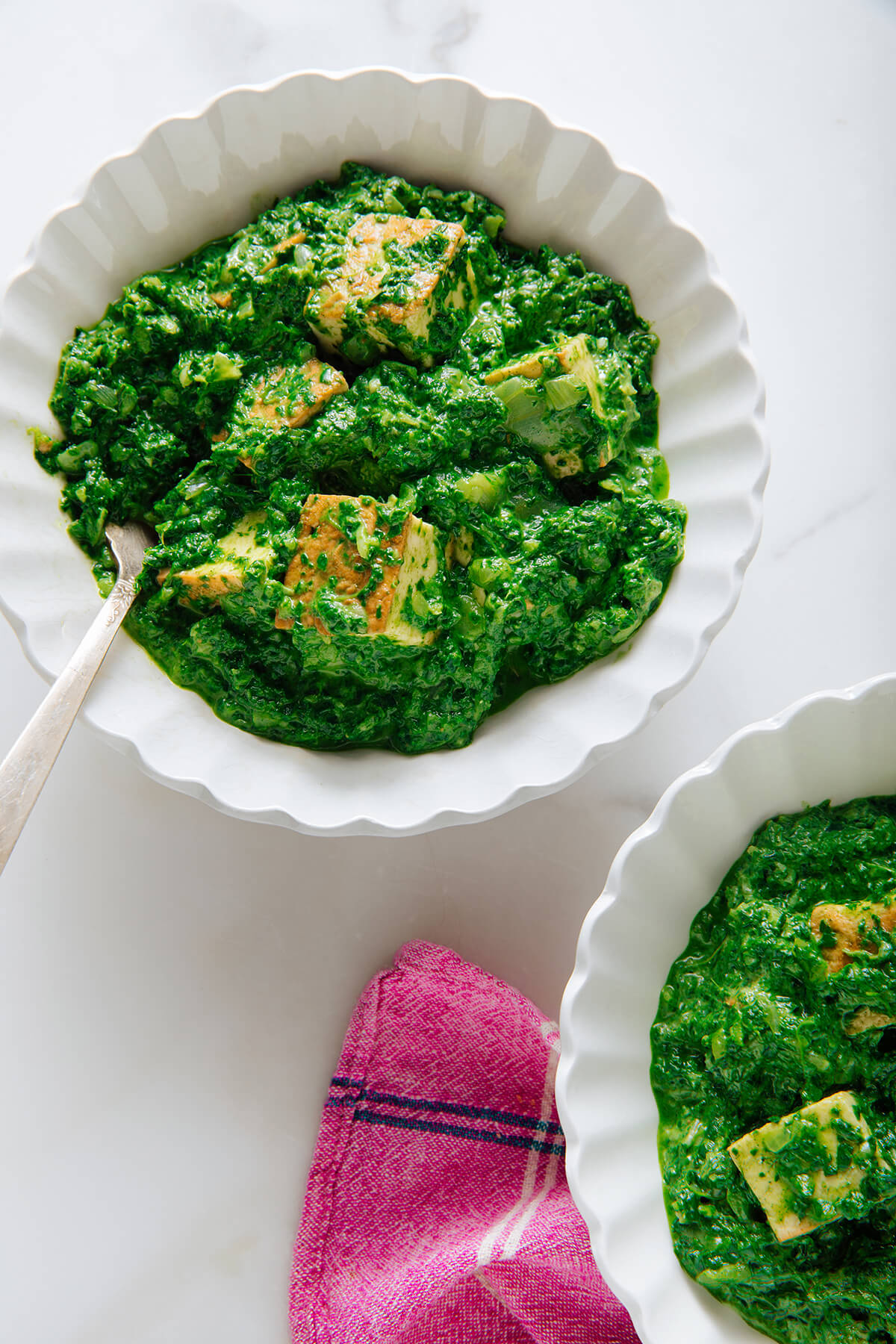
Palak paneer is the dish I love most to order at Indian restaurants, and I’m thrilled to share my homemade take with you! Palak paneer showcases delicate paneer cheese cubes in a well-seasoned, silky spinach sauce. “Palak” translates to spinach, and this bold green meal is packed in flavor. It’s vegetarian comfort food at its very best.
Palak paneer originates from the Punjab area in Northern India. I’m hoping to reach India someday, yet for now, I’m shaping my version around the many Indian restaurants I visit. I wanted to master how to prepare palak paneer using organic spinach while I was expecting our son, because spinach unfortunately contains more pesticide residue by weight than any other type of produce.
I repeated making this meal again and again (at least six times, to be exact) to confirm the method delivers the greatest flavor while staying efficient from beginning to end. Now you can prepare palak paneer for dinner whenever the craving strikes. This recipe takes about 45 minutes to make!
3 Reasons to Make This Palak Paneer
This recipe differs a bit from the usual approach. Here’s the reason.
- The recipe offers choices for fresh or frozen spinach, letting you pick what suits you best. Either way, I suggest choosing organic.
- We rely heavily on the food processor. If you’re going to use it, you might as well get the most out of it. We’ll start by processing the spinach—no matter whether it’s fresh or frozen. Next, we’ll process the ginger, garlic, chili pepper and onion. Hooray for less chopping!
- We’ll bake the paneer with oil and seasonings. Paneer cheese is gentle in flavor and doesn’t bring much taste on its own. Some recipes mix plain cheese into the greens, while others cook the cheese in a pan until it turns golden, which draws out more flavor. To keep things streamlined, we’ll bake the cheese while you handle the remaining steps. It comes out wonderfully flavorful from the oven, and it’s ready to fold into the greens at just the right moment.
Watch How to Make This Recipe
Ingredient Options & Substitutions
You’ll locate the complete recipe at the end of the post, but these are helpful alternatives to consider.
Fresh vs. frozen spinach
I like the brighter taste of fresh spinach, but frozen spinach also works well, costs less, and provides the same nutritional value. Just make sure your frozen spinach is kept correctly so it doesn’t turn icy—spinach that’s suffered freezer-burn won’t taste great.
8 to 12 ounces paneer cheese
Paneer is sold in packages from 8 to 12 ounces, depending on what your grocery store carries. As a point of reference, these images show 10 ounces of paneer. Using the full 12 ounces results in a richer, more “cheesy” dish, though you might as well use it all if that’s what you found.
Oil or ghee
Saag paneer is commonly prepared with ghee—clarified butter with a distinctively nutty, caramel-like flavor. I don’t always have ghee available, but I can confirm the recipe still comes out fantastic with olive oil or avocado oil (you won’t notice either flavor in the finished dish).
Yogurt or cream
Greek yogurt adds a tangy note that makes the dish taste more vibrant, which I really enjoy. You’ll need to warm the yogurt a bit before it goes into the mixture to stop it from curdling, and I include easy guidance in the recipe (it’s simple).
Heavy cream has a richer feel and softens the other flavors slightly. Since it’s high in fat, warming the mixture isn’t required.
What’s the difference between palak paneer and saag paneer?
“Palak” refers to spinach specifically, while “saag paneer” points to leafy greens, such as mustard greens, spinach, or kale. You can convert this recipe into saag paneer by swapping in a different green for the spinach. Frozen kale worked wonderfully for me.
Serving Suggestions
Serve saag paneer with warm naan (Indian flatbread) or with cooked basmati rice (here’s how I cook brown rice, including brown basmati).
For a bigger spread, include one or more of these options:
Please share how your version turns out in the comments! I’m confident you’ll enjoy it as much as I do.
Print
Palak Paneer
Palak paneer consists of paneer cheese gently simmered in a well-seasoned spinach sauce. This homemade palak paneer comes together quickly and delivers fantastic flavor. Recipe makes 4 servings.
- 16 ounces fresh or frozen spinach*
- 1-inch piece of fresh ginger, quartered lengthwise
- 4 cloves garlic, each cut into multiple segments
- 1 large green serrano chile or 1 medium jalapeno, ribs and seeds removed, cut into 1-inch portions
- 1 large yellow or white onion, halved and chopped into 1-inch chunks
- 1 teaspoon ground coriander
- ½ teaspoon ground cumin
- ½ teaspoon garam masala
- ¾ teaspoon fine salt, divided, to taste
- 8 to 12 ounces paneer (Indian cheese), depending on how rich you want it to be, cut into ¾-inch to 1-inch cubes
- 4 tablespoons extra-virgin olive oil or avocado oil, divided
- ½ cup whole-milk plain Greek yogurt or heavy cream
- Optional squeeze of fresh lemon juice or finely chopped tomatoes for acidity
- For serving: cooked basmati rice or flatbread (roti or naan), warmed
- Set the oven to 400 degrees Fahrenheit and prepare a large, rimmed baking sheet with parchment paper so the paneer won’t cling. If you’re working with frozen spinach, defrost it in the microwave in a microwave-safe glass dish, about 5 minutes on high—do not let the extra moisture run off.
- While that happens, add the garlic and ginger to a food processor and pulse until finely chopped, stopping to scrape the sides if needed. Toss in the chili pepper and onion, then pulse again until finely chopped (stop well before it turns into a paste). Move the mixture to a bowl, then put the food processor bowl back onto the machine (there’s no need to rinse it).
- Return to the food processor and process several handfuls of the fresh spinach until it’s chopped into extremely small pieces, then keep going as needed until all the spinach is used and you have a mixture that’s almost smooth. (Alternatively, process the thawed spinach mixture until smooth.)
- Set the paneer cubes onto the baking sheet you prepared. Dust everything with the coriander, cumin, garam masala, and ½ teaspoon of the salt, then drizzle 2 tablespoons of oil over the top. Mix thoroughly until the cheese is evenly coated with the oil and spices. Spread the coated cheese across the pan in an even layer. Bake for 10 minutes, stir, then bake for an additional 3 to 5 minutes, until the paneer turns a deep golden color.
- In a medium stainless steel frying pan set over medium heat, heat the remaining 2 tablespoons of oil. Add the onion mixture (keep the bowl aside for later) and ¼ teaspoon of the of the salt. Sauté for 5 to 7 minutes, until the onion turns translucent and starts to take on a light golden hue, stirring more and more often as the minutes pass to avoid scorching.
- Stir in the spinach and mix well. Add the cooked paneer, ½ cup water and ¼ teaspoon salt, then stir and cook for 7 to 10 minutes, until everything is heated through and the flavors blend together.
- Turn off the heat and take the skillet off the hot burner. Move a couple of heaping spoonfuls of the spinach into the reserved bowl, then whisk in the yogurt (this approach cools the yogurt slightly so it doesn’t curdle—if you’re using cream, you can mix it straight into the skillet). Next, fold in half of the yogurt mixture into the spinach and stir until combined, then add the remaining yogurt mixture. Adjust with extra salt to taste (I typically add ⅛ teaspoon). Garnish with an optional squeeze of lemon juice or chopped tomatoes to brighten everything up, and serve with warm rice or flatbread, if you like.
Notes
Recipe adapted from Aarti Sequeira, with the roasted paneer idea inspired by Anita Jaisinghani.
*Options for greens: Palak paneer features spinach and cheese, though you can create a variation known as saag paneer using a range of greens, such as mustard greens or kale.
Nutrition
The information displayed is an estimate provided by an online nutrition calculator. It shouldn’t be taken as a replacement for a qualified nutritionist’s guidance. See our full nutrition disclosure here.

Post Comment