Socca
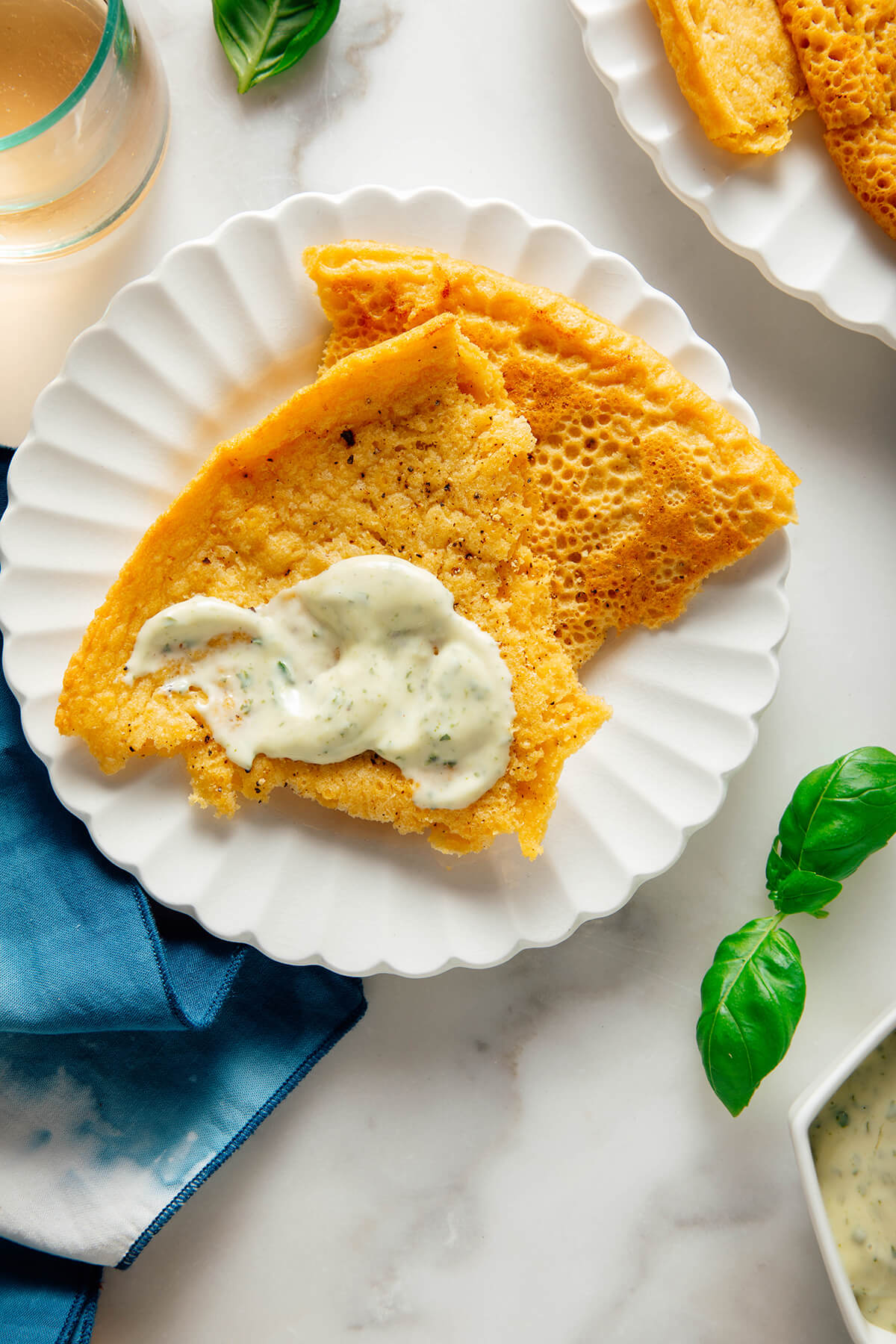
Have you come across socca? If not, allow me to introduce it to you! Essentially, it’s a hearty, flavorful and salted pancake made from chickpea flour, cooked in vigorously hot olive oil. The outer parts turn crisp yet pleasantly chewy, the inside stays flaky and soft, and the base becomes netted and golden. It’s so delicious. You really should taste it.
Socca is a street specialty from Nice, France, whose roots go back hundreds of years (it’s closely connected to Italian farinata). On our honeymoon, I got to try the authentic version, and I can’t stop thinking about it—especially this homemade take.
To prepare socca, you’ll need a bag of chickpea flour (I prefer Bob’s Red Mill, which you can usually find in well-stocked supermarkets). You likely already have the remaining items—olive oil, water, salt, pepper and cumin. That’s everything! Below you’ll find step-by-step photos and a short cooking video, followed by the full recipe.
3 Reasons to Make This Socca Recipe
1) You don’t need any special tools.
In Nice, socca is cooked in large pans inside special wood-fired ovens. At home, I’ve had excellent results using my cast iron skillets. If you don’t own cast iron skillets, you can choose stainless steel instead—just place it nearer the top of the time window provided to get the right level of browning. Avoid non-stick pans—they aren’t made for intense temperatures.
This recipe makes one 12-inch socca, around 1/4-inch thick, with crunchy edges and a lightly custard-like center. It’s ideal for grabbing as a snack or presenting as a pizza base. The only drawback: a 12-inch cast iron skillet is bulky, so you’ll need to handle it with care when it’s boiling hot.
Alternatively, you can bake two batches in a 10-inch skillet by cutting the batter into two portions. It comes out thinner and crunchier that way, which I love. If you’d like to treat the socca as flatbread for a wrap, plan on baking it in two batches. You’ll see the details in the recipe notes.
2) You can cook it immediately.
Traditionally, socca batter is prepared in large quantities, then allowed to rest until it’s time to cook. Many recipes keep this approach and advise you to let the batter sit for an hour or more before baking.
To my surprise (and pure joy), my socca turned out even better without resting. The crumb becomes more pleasant and more flaky when I stir the batter while the oven is warming up! You can make socca from pantry ingredients any time.
3) It’s a nutritious option that fits special diets.
Socca is prepared using wholesome chickpea flour, making it more nourishing than flatbreads based on wheat flour. You get healthy amounts of protein, monounsaturated fats and complex carbohydrates, including fiber. If you’re curious, tap the “nutrition information” section beneath the recipe to see a complete breakdown.
Socca is both gluten-free and vegan, which is a tricky combination to pull off! It works as an appetizer or snack that everyone can appreciate.
Watch How to Make Socca
How to Serve Socca
Rip off a piece and enjoy the warm socca plain, with extra freshly ground black pepper or without. Imagine you’re spending the summer in the South of France, and pair it with a chilled glass of rosé.
You can also dip it into a tasty sauce, like the creamy basil mayo shown in my photos—it tastes like a summertime aioli. Find out how to prepare it in my recipe notes. Or it would be great with Green Goddess Tahini Dip, which is vegan. If you’re into olives, serve it alongside tapenade as well.
Serve it as a messy wrap. Begin with creamy cheese such as ricotta, feta or goat cheese, or keep it vegan with tahini sauce. Add chopped fresh vegetables like tomatoes and cucumbers, or go with roasted vegetables like eggplant or cauliflower. Sun-dried tomatoes, olives, or a few sprigs of fresh basil make wonderful finishing touches. Take a look at Pinch of Yum’s socca with whipped feta and tomato salad—it’s fantastic.
You can also turn it into an amazing pizza. Socca creates a crisp crust that’s lighter than flour-based crusts. Top it with basil pesto, mozzarella and any of the options listed above.
Recipe Tip
To confirm it’s done, use a spatula to lift the socca gently (it should come up easily) and check the underside. When it’s ready, it will be a web-like, golden brown color. See the socca piece pictured below with the air bubbles—that’s what you’re aiming for. If you’re unsure, bake it for another minute or two.
Print
Socca
This homemade socca bakes into a beautiful golden color, with crisp edges and a chewy bite—no waiting required. Recipe makes one 12-inch flatbread or two thinner 10-inch flatbreads (see note).
- Set a large, 12-inch* cast iron or stainless steel skillet on the center rack of the oven. Heat the oven to 475 degrees Fahrenheit.
- While the oven preheats, prepare the batter. In a bowl, whisk the chickpea flour, water, 2 tablespoons of the olive oil, salt, pepper and cumin. Hold aside until the oven is ready.
- Carefully take the hot skillet out of the oven (use oven mitts!). Pour the remaining tablespoon of oil into the skillet, then swirl to coat the surface evenly. Add in all the batter, and return the skillet to the oven.
- Bake for 17 to 19 minutes, until the edges are toasted and pulling slightly away from the skillet, and the underside turns golden and lacy brown. Serve the socca warm or let it cool to room temperature. Any leftovers will keep in the refrigerator for as long as 5 days or in the freezer for several months.
Notes
Recipe developed through trial and error, using David Leibovitz, The Daring Gourmet, and Pinch of Yum as references.
Medium skillet option: If you’d rather make smaller soccas or you only have a 10-inch skillet, you can split the batter into two portions and bake in two batches. Use ½ tablespoon olive oil in the skillet for each batch, and bake for 12 to 15 minutes.
Creamy basil sauce: To create the herb sauce shown in my photos, slice 1 medium clove of garlic into several pieces and finely chop it using a food processor. Add 1 cup mayonnaise, 1 cup lightly packed fresh basil leaves, a scant ½ teaspoon fine salt, and plenty of freshly ground black pepper. Blend until smooth.
Nutrition
The information displayed is an estimate generated by an online nutrition calculator. It shouldn’t be treated as a replacement for a qualified nutrition professional’s guidance. View our complete nutrition disclaimer here.


Post Comment